Proper installation of floor drains is critical to ensuring efficient water removal and preventing issues such as standing water, unpleasant odors, or water damage. A Stainless Steel Floor Drain Factory must guide suitable installation practices, focusing on three main factors: installation height, slope, and pipe connection methods. By optimizing these parameters, manufacturers can enhance drainage performance, extend the lifespan of the system, and ensure user satisfaction.
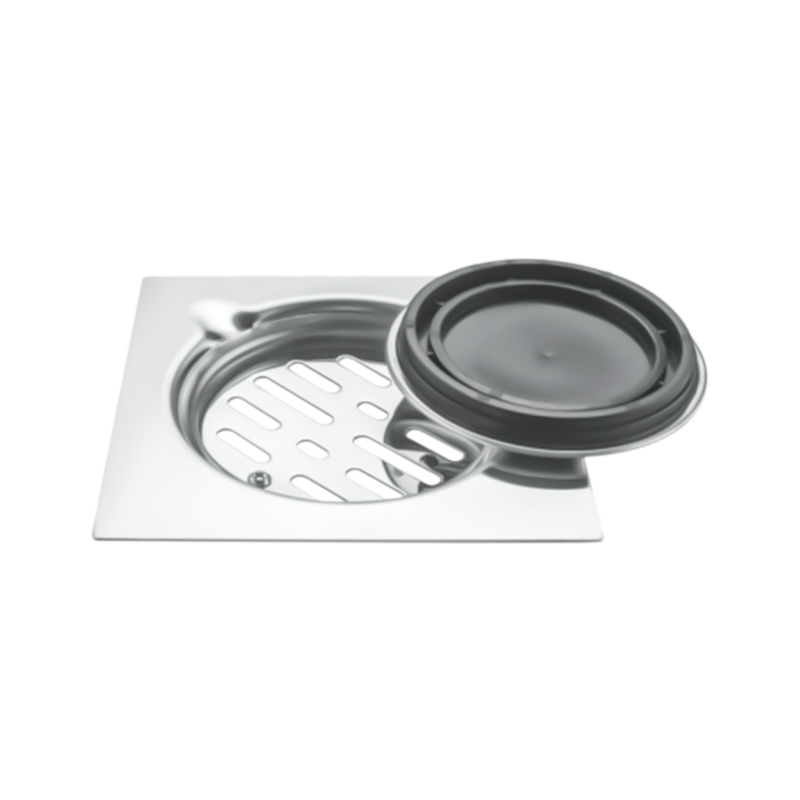
1. Alignment with Floor Level: The height of the drain relative to the finished floor is crucial. Installing the drain too high can create a lip that traps water, while installing it too low can cause water to flow around it instead of into it. The drain should ideally be flush with the floor surface or slightly recessed to facilitate smooth water entry.
2. Accommodation for Flooring Materials: The chosen installation height must consider the thickness of tiles, stone, or other floor coverings. Stainless Steel Floor Drain Factory typically recommends calculating the height based on the combined thickness of the adhesive, tile, and any leveling compound to maintain a flush surface.
3. Preventing Pooling Near the Drain: Correct height alignment ensures water flows directly into the drain rather than collecting around its edges, reducing the risk of slip hazards and potential water damage to flooring.
Slope Requirements: The floor surrounding the drain should be sloped towards it, typically at a gradient of 1% to 2% (1–2 cm drop per meter) for residential spaces, and up to 2%–3% for commercial or industrial areas with higher water flow.
Consistent Gradient: Maintaining a consistent slope prevents water from stagnating in low spots. Uneven slopes can create pools that reduce drainage efficiency and accelerate wear or corrosion.
Integration with Multiple Drains: In larger areas or wet zones with multiple drains, the slope should be carefully planned to direct water evenly to each drain without overloading any single unit.
Water Flow Testing: After installation, the system should be tested by pouring water over the floor to verify that it flows efficiently into the drain. This step identifies low spots or improper slopes that could cause pooling.
Adjustment and Fine-Tuning: Minor adjustments in floor leveling, pipe alignment, or drain height may be necessary to achieve suitable drainage performance. Stainless Steel Floor Drain Factory often provides guidelines for such fine-tuning to ensure long-term reliability.
Optimizing installation height, floor slope, and pipe connection methods is essential for efficient and reliable performance of a Stainless Steel Floor Drain Factory system. Proper height alignment, consistent gradients, and precise pipe connections ensure water flows smoothly into the drain without pooling, preventing damage, improving safety, and extending system lifespan. By following manufacturer guidelines and performing testing, installers can guarantee that floor drainage systems operate effectively under all conditions.

 Add: No 3 District Xiaowufen Industrial Zone, Pengjie Town, Luqiao District, Taizhou City, Zhejiang Province, China.
 Tel: +86-576-89203599
 Fax: +86-576-89203598
 Email: [email protected],[email protected],[email protected]
Copyright © Taizhou Shenzhou Sanitary Ware Co., Ltd. All Rights Reserved.


 عربى
عربى 0
0
