Bathrooms, kitchens, laundry rooms — anywhere water shows up as part of the daily routine — need drainage hardware that can just take it. Constant contact with water, cleaning chemicals, and whatever else gets poured down there isn't optional in these spaces, it's the job description.
But a drain doing its job isn't just about moving water out of the way. The material it's made from quietly determines a lot more than that — how the surface holds up, how much upkeep it demands, how long it actually lasts before something needs replacing. Materials that don't handle moisture well tend to show it eventually, and that usually means more scrubbing or an earlier swap-out than anyone wanted.
Stainless steel has become the go-to choice in a lot of these applications, mainly because its surface just stays put. Among the various stainless grades floating around, SS 304 tends to get picked specifically for wet environments — it resists moisture well and doesn't demand much fuss to keep clean.
A Floor Drain SS 304 leans on exactly these properties. What makes it work in wet conditions comes down to two things: the internal makeup of the metal itself, and the thin protective layer that naturally forms when it's exposed to air.
None of this happens by accident, either. A Stainless Steel Floor Drain Factory has to think through more than just sourcing the right raw material — product shape, surface finishing, and how the drain will actually be used all factor into how it's built.
Water and metal don't usually get along over the long haul — moisture reacts with metal surfaces given enough time, and things go downhill from there. Stainless steel sidesteps this problem in a fairly elegant way.
Chromium in the steel reacts with oxygen in the air and forms an incredibly thin protective film on the surface. It's barely there, but it's enough to keep moisture from reaching the metal underneath. And here's the useful part — if that layer ever gets scratched or damaged, it rebuilds itself as long as it's exposed to oxygen again. It's essentially self-healing.
For a floor drain, that's a genuinely practical trait. These things sit in water, humidity, and cleaning chemicals more or less constantly, so having a surface that stays stable through all that matters. Less reaction to moisture means fewer surprises down the line.
What makes this work particularly well for wet spaces comes down to how the protection is built in rather than applied on top. Painted or coated metal relies on that outer layer staying intact — scratch through it, and the metal underneath is exposed. Stainless steel doesn't have that vulnerability, because the protection is part of the material itself, not a separate skin sitting on top of it.
Nickel doesn't get talked about as much, but it's doing real work in SS 304. It helps keep the internal structure of the steel stable, which is where the material gets its balance of toughness and flexibility.
Wet areas rarely mean just water. Floor drains end up dealing with soap scum, cleaning liquids, food residue, all sorts of everyday liquid contact. Having a material that doesn't react badly to this mixed bag of substances is genuinely useful — nickel is a big part of why SS 304 handles it as well as it does.
Practically speaking, this shows up in a few ways. The metal holds its internal arrangement well, so it doesn't warp or degrade with regular impact and handling. It also tends to shrug off contact with the range of liquids a drain typically encounters, rather than reacting badly to specific substances.
Drains need to hold their shape through installation and years of regular use, while still being able to handle whatever gets thrown at them in different indoor settings. That combination of strength and adaptability is basically what nickel brings to the table.
In spaces tied to food prep or frequent cleaning, hygiene isn't a nice-to-have, it's the whole point. And a surprising amount of that comes down to surface texture.
SS 304 has a non-porous surface, so liquids don't really soak in or get trapped in tiny crevices the way they might with rougher materials. Smooth surfaces are just easier to wipe clean — there's nowhere for residue to hide.
That matters a lot in kitchens and food processing areas, where cleanliness standards are naturally higher. But even in a regular household bathroom or laundry room, it just makes the routine wipe-down faster and less annoying.
| Application Area | Common Conditions | Material Consideration |
|---|---|---|
| Bathroom | Frequent water contact and cleaning | Easy surface care |
| Kitchen | Water, food residue, cleaning products | Clean and stable surface |
| Laundry Room | Continuous humidity exposure | Suitable for daily moisture |
| Food Processing Area | Regular washing and liquid contact | Hygienic material choice |
The pattern here is pretty clear — the more frequently a space gets cleaned or exposed to moisture, the more the material choice actually matters. A surface that resists buildup on its own just means less scrubbing and fewer headaches down the road.
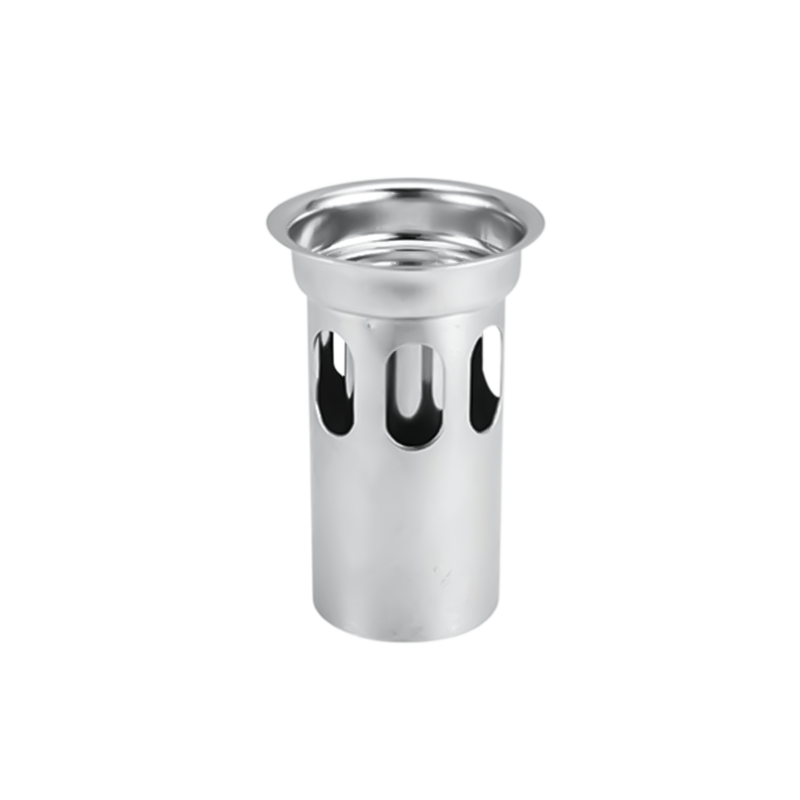
Wet environments don't always sit at a comfortable room temperature. Hot water, steam, cold surfaces, sudden shifts between the two — a lot of daily operations throw materials through this kind of range without much warning. And that's exactly where a material's stability starts to matter.
SS 304 holds its core properties reasonably well across these swings, which is why it shows up so often in spaces where water temperature isn't consistent. A kitchen drain might see near-boiling water one minute and lukewarm cleaning runoff the next. Other spaces lean colder, depending on climate or use.
Temperature shifts tend to mess with materials in predictable ways — expansion, contraction, gradual surface wear. A metal that holds its structure through these changes just ages better, plain and simple, and that translates into fewer replacements down the line.
A few spots where this temperature swing shows up regularly:
This matters even more when drains sit near equipment that generates heat or cold. The right material choice here means the drain just keeps working without needing constant attention.
SS 304 has found its way into a surprising range of industries, mostly because it checks the boxes that matter for anything dealing with constant water or liquid exposure — stable surface, easy to clean, holds up against whatever environmental conditions come its way.
Anything involving continuous moisture contact tends to lean on stainless steel eventually. Plumbing fittings, fluid transport systems, water treatment equipment — these all deal with nonstop water exposure, and stainless steel handles that reliably.
Food and beverage production adds another layer of demand, since hygiene isn't optional there. Equipment used for processing or storing food needs surfaces that don't hold onto liquid or trap residue, and SS 304 fits that requirement well.
You'll typically find it in water purification systems, plumbing hardware, fluid transport equipment, food processing lines, kitchen sinks, and beverage storage containers. But drainage specifically depends a lot on where it's installed — a bathroom floor drain deals with a fairly mild set of conditions compared to what a food processing floor drain has to handle daily. Manufacturers who understand that difference end up building more appropriate products for each space.
Good material is only half the equation. How the drain is actually built — its shape, its internal structure, the small surface details — determines just as much about how it performs day to day.
A floor drain has three basic jobs: move water through efficiently, resist residue buildup, and stay easy to clean. Getting all three right depends on a handful of design choices working together rather than any single feature carrying the load.
The internal flow structure decides how smoothly water actually moves through. Surface finishing plays into how easily grime wipes away. The filter setup controls what gets caught before it clogs the system further down. And installation compatibility just makes sure the drain actually fits the floor it's going into, without awkward workarounds.
Floor Drain SS 304 brings material and structure together — the steel handles the moisture side, and the design decides how well that translates into actual performance on the floor. A drain meant for a busy commercial kitchen and one meant for a home bathroom really shouldn't look the same underneath, because the demands placed on them aren't the same either.
Getting material selection right starts well before manufacturing begins. A Stainless Steel Floor Drain Factory typically works backward from the application — figuring out what the drain will actually face day to day before deciding how to build it.
Production runs through a handful of stages, each one needing careful attention: choosing steel grades that fit the intended use, shaping the drain body without losing dimensional accuracy, treating the surface so it stays easy to clean, and inspecting the finished piece before it ships out.
Small details in manufacturing end up mattering more than people expect — how the surface is finished, how joints and connection points are handled, how consistent the structural details are across a batch. A factory that's spent real time on stainless drainage products tends to notice these things instinctively, adjusting for a household bathroom drain differently than they would for something going into a food processing facility where hygiene standards run higher.
At the end of the day, the goal isn't just shaping a piece of metal — it's building something that actually solves a drainage problem in a specific real-world setting.
Even the material still needs some upkeep. Regular maintenance is what keeps a drainage system performing the way it's supposed to, and skipping it just invites residue buildup and slow clogging over time.
How often that maintenance needs to happen really depends on where the drain lives. A kitchen floor drain dealing with food particles and grease needs far more frequent attention than a quiet bathroom drain that mostly just sees soap and water.
In practice, that means clearing visible residue off the surface regularly, keeping the drainage path unobstructed, checking periodically for buildup that might be starting to block flow, and giving the area around the drain cover a proper wipe-down now and then.
SS 304 makes this easier than materials, simply because liquids and residue don't soak into the surface the way they might with other metals. But "easier to maintain" isn't the same as "maintenance-free" — a routine still needs to happen, just a lighter one. And that routine should really match the environment — a kitchen drain and a bathroom drain just aren't fighting the same battles.
Wet environment products keep circling back to the same handful of priorities — hygiene, durability, ease of upkeep. And material choice sits right at the center of all three, since different environments push materials in different directions.
SS 304 checks these boxes reasonably well: stable under regular moisture exposure, resistant to the wear that comes with frequent cleaning, and forgiving enough to handle the range of conditions a typical wet space throws at it.
But material alone doesn't make a good drain — it needs thoughtful structural design behind it, built around how the drain will actually flow water and survive daily use in its specific setting.
A Stainless Steel Floor Drain Factory is really where these two things come together — turning raw material properties into something that actually works on a real floor, in a real building, under real conditions. As new applications keep emerging and expectations around hygiene and durability keep shifting, that combination of careful material choice and practical design is what lets drainage products keep pace with whatever comes next.


 Add: No 3 District Xiaowufen Industrial Zone, Pengjie Town, Luqiao District, Taizhou City, Zhejiang Province, China.
 Tel: +86-576-89203599
 Fax: +86-576-89203598
 Email: [email protected],[email protected],[email protected]
Copyright © Taizhou Shenzhou Sanitary Ware Co., Ltd. All Rights Reserved.


 عربى
عربى 0
0
